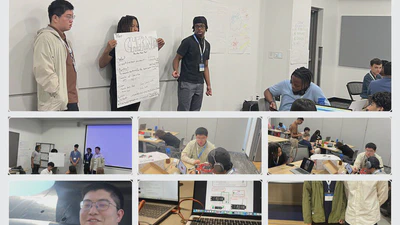
A claim, then the work that tests it

Artificial minds,
human values.

Technical progress is not automatically human progress. The site starts from that idea, then shows the systems, papers, and teaching I have used to make it concrete.

The claim

Build systems that remain answerable to the people they affect.

The work on this site is not a list of venues first. It is a sequence of ideas about access, compute, and judgment — and then the papers, code, and teaching used to pressure-test them.

01

Access is a design problem

If a system can generate language, images, or video, the interesting question is not only whether the output looks good. It is who can enter the conversation at all. Sign-language generation is one place where that question becomes unavoidable.

Tested in Text2Sign

02

Capability should survive real limits

A method that only works on a cluster is a different object from a method that can run on one GPU or on a device. Efficiency is not a performance footnote. It is part of whether a system can be used, inspected, and shared.

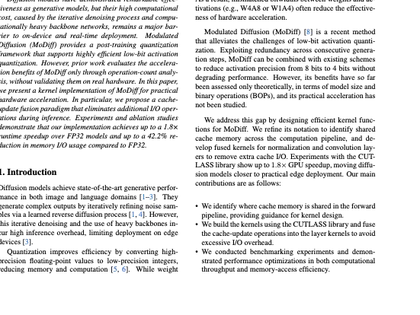
Tested in on-device diffusion and University Ranking

03

Adaptation needs to stay visible

Fine-tuning can raise a score while quietly changing what a model attends to, forgets, or hides from later review. If people are going to rely on the result, the change itself has to remain measurable — and someone has to remain able to disagree with it.

Tested in the CLIP attention study and the notes on human judgment

Writing
When Bias Becomes Infrastructure featured image

When Bias Becomes Infrastructure

A closer look at how AI systems can formalize unequal treatment, with the health-care risk algorithm study as a concrete warning.

Read more
Generative AI and the Reorganization of Work featured image

Generative AI and the Reorganization of Work

The labor issue is not only whether jobs disappear, but how AI changes bargaining power, task control, and whose work becomes more precarious.

Read more
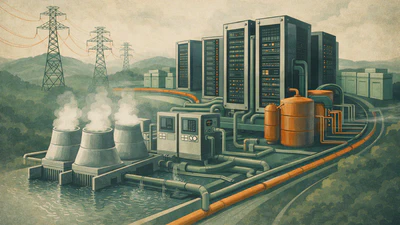
The Material Cost of AI featured image

The Material Cost of AI

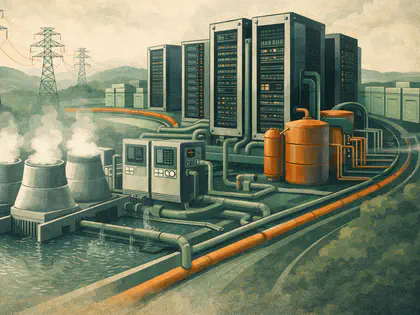
AI is often described as pure software, but its growth depends on data centres, power systems, cooling, and public infrastructure.

Read more
Practice
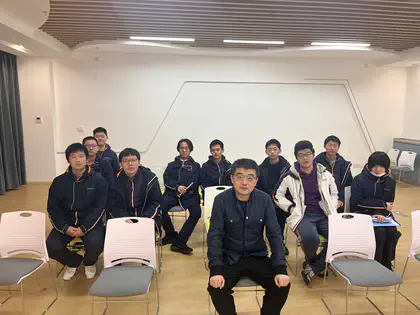
Meeting #3: From Sketch Recognition to AIGC — Industrial AI in Practice featured image

Meeting #3: From Sketch Recognition to AIGC — Industrial AI in Practice

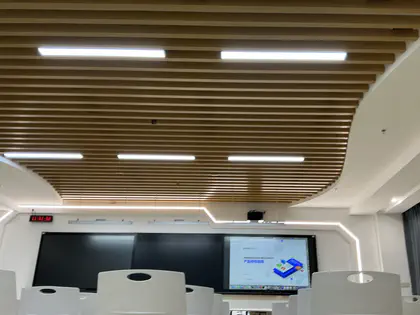
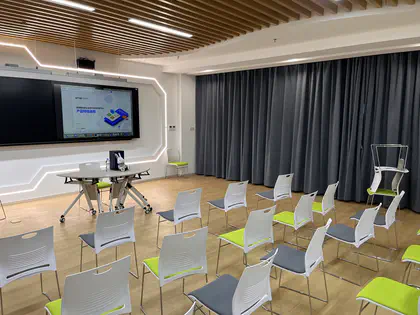
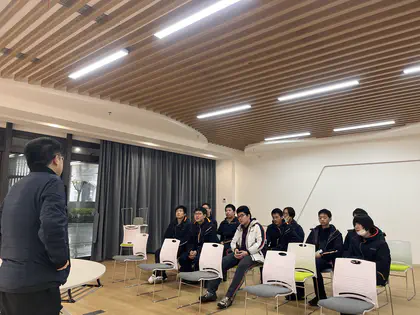
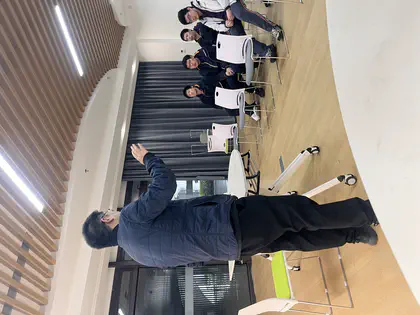
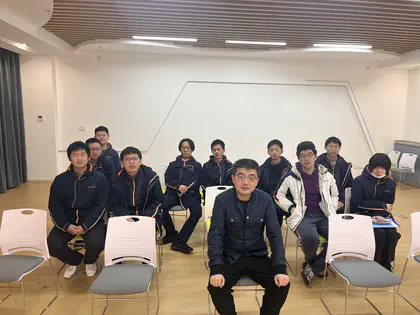
The third NFLS AI Club meeting featured an invited guest lecture on how computer vision, multimodal understanding, and large language models are deployed in real industrial …

Read more
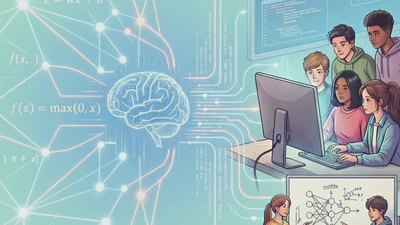
Meeting #2: Deep Learning Workshop — From Math to Code featured image

Meeting #2: Deep Learning Workshop — From Math to Code

The second meeting was a 35-minute technical workshop tracing a single idea from visual intuition through rigorous mathematics to working PyTorch code: how neural networks solve …

Read more
Meeting #1: Ice Breaking — Welcome to the NFLS AI Club featured image

Meeting #1: Ice Breaking — Welcome to the NFLS AI Club

The first formal meeting brought new and returning members together for an ice-breaking session designed to surface motivations, share curiosity, and establish the club as a real …

Read more
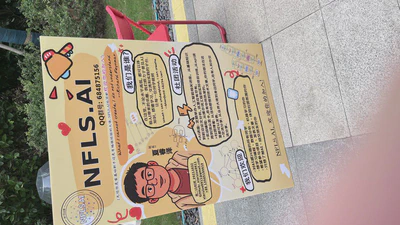
NFLS AI Club at the School Club Fair featured image

NFLS AI Club at the School Club Fair

The NFLS AI Club officially launched at the annual school club fair, opening recruitment and introducing AI to students across the school.

Read more
Elsewhere
NYLF Engineering Scholar featured image

NYLF Engineering Scholar

A residential engineering leadership program at Georgia Tech focused on design thinking, robotics, communication, and collaborative problem solving.

Read more

Continue the argument

If an idea here is unfinished, say so.

I am glad to talk about a claim that should be sharper, a result that does not yet support it, or a setting where the work should be tested next.

Ruize Xia 🚀

Ruize Xia

Student researcher · President, NFLS AI Club

Nanjing Foreign Language School

Artificial Minds, Human Values

About

Artificial Minds, Human Values

I’m Ruize Xia, a student at Nanjing Foreign Language School in Nanjing, Jiangsu, China. ORCID: 0009-0000-0501-0943.

The site is organized around a claim, not a venue list: technical progress is not automatically human progress. I use that idea to decide what to build next — accessible generation, systems that still work under real compute limits, and evaluation that stays visible to the people affected.

The public work is how the claim gets tested. Text2Sign asks whether sign-language video can be generated under a single-GPU budget. The CLIP attention study asks what fine-tuning changes besides the score. The on-device diffusion kernels ask whether an efficiency story survives hardware measurement. Code and checkpoints are on GitHub and Hugging Face.

The NFLS AI Club is the same argument taught in public: how a model works, then whether it should work that way, and for whom.

Education

High School

Nanjing Foreign Language School

Focus areas

Accessible generative models Efficient diffusion systems Vision-language model adaptation AI ethics and governance Human-centered evaluation AI literacy in schools